Describe the signal. We'll build it.
Most tools give you a generic list of signals to pick from. HotSauce lets you write your own in plain English, then monitors your market for it every day.
Three things every other tool calls a buying signal
None of them tell you what a company is actually investing in, or why that means they need what you sell.
Intent data
Someone at a big company read something about your category. Sold to you and everyone chasing the same account.
Funding rounds
They have money. It says nothing about what they'll spend it on, and every vendor in your space got the same alert.
Job changes
Someone started a new role. So did four thousand other people this week.
The best signals don't exist yet
Describe the behaviours, changes, and challenges that matter to you.
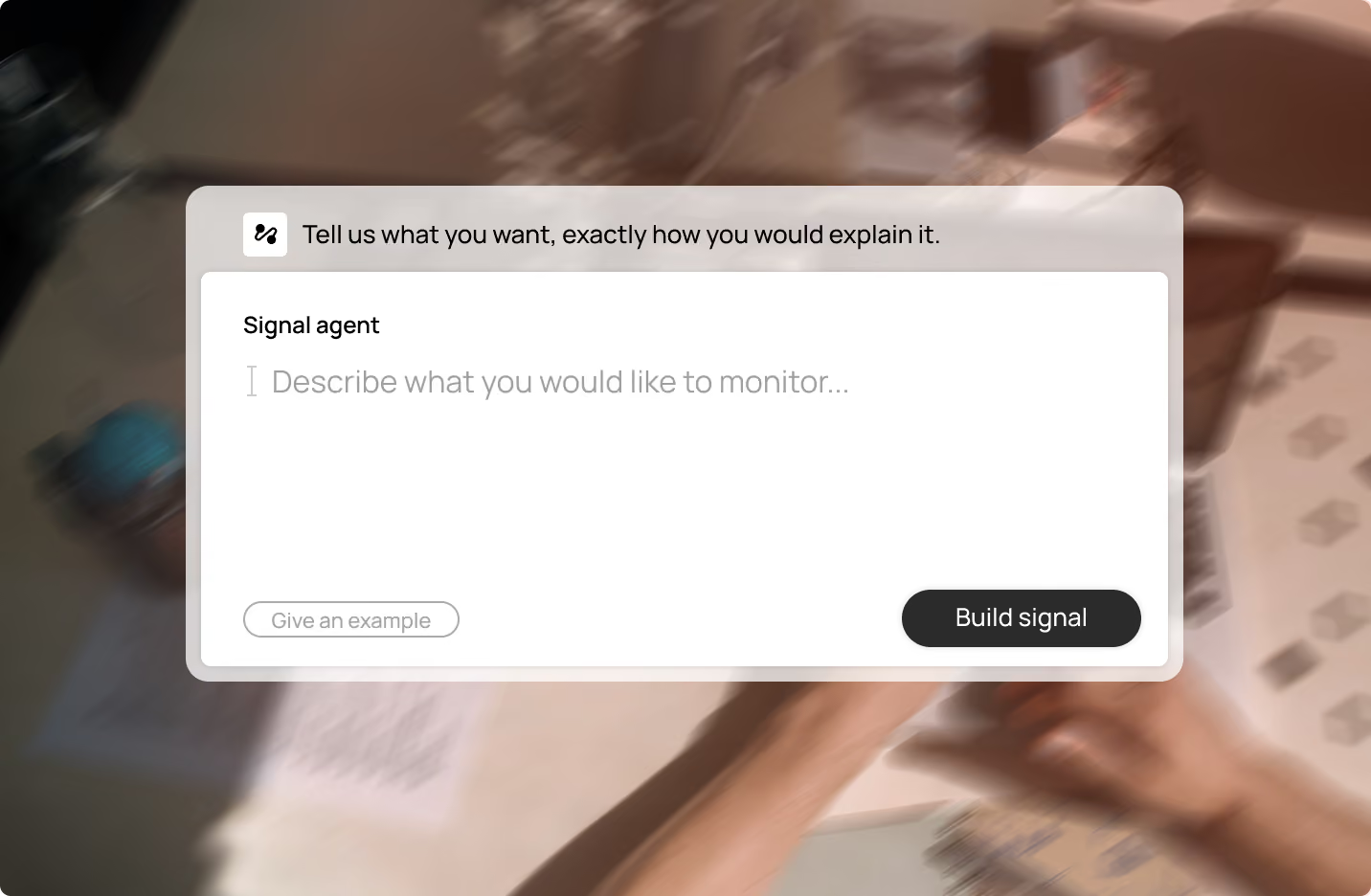
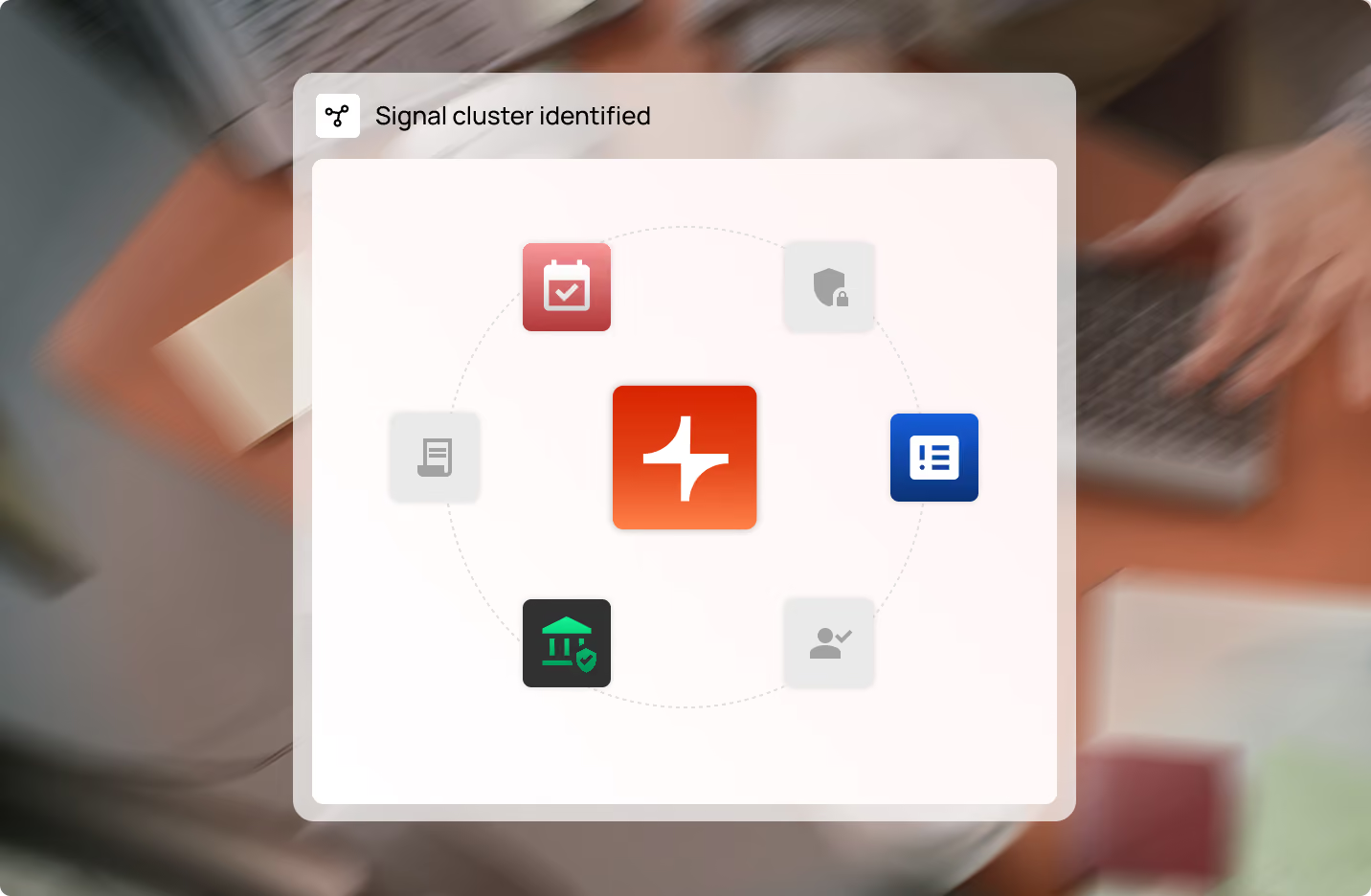
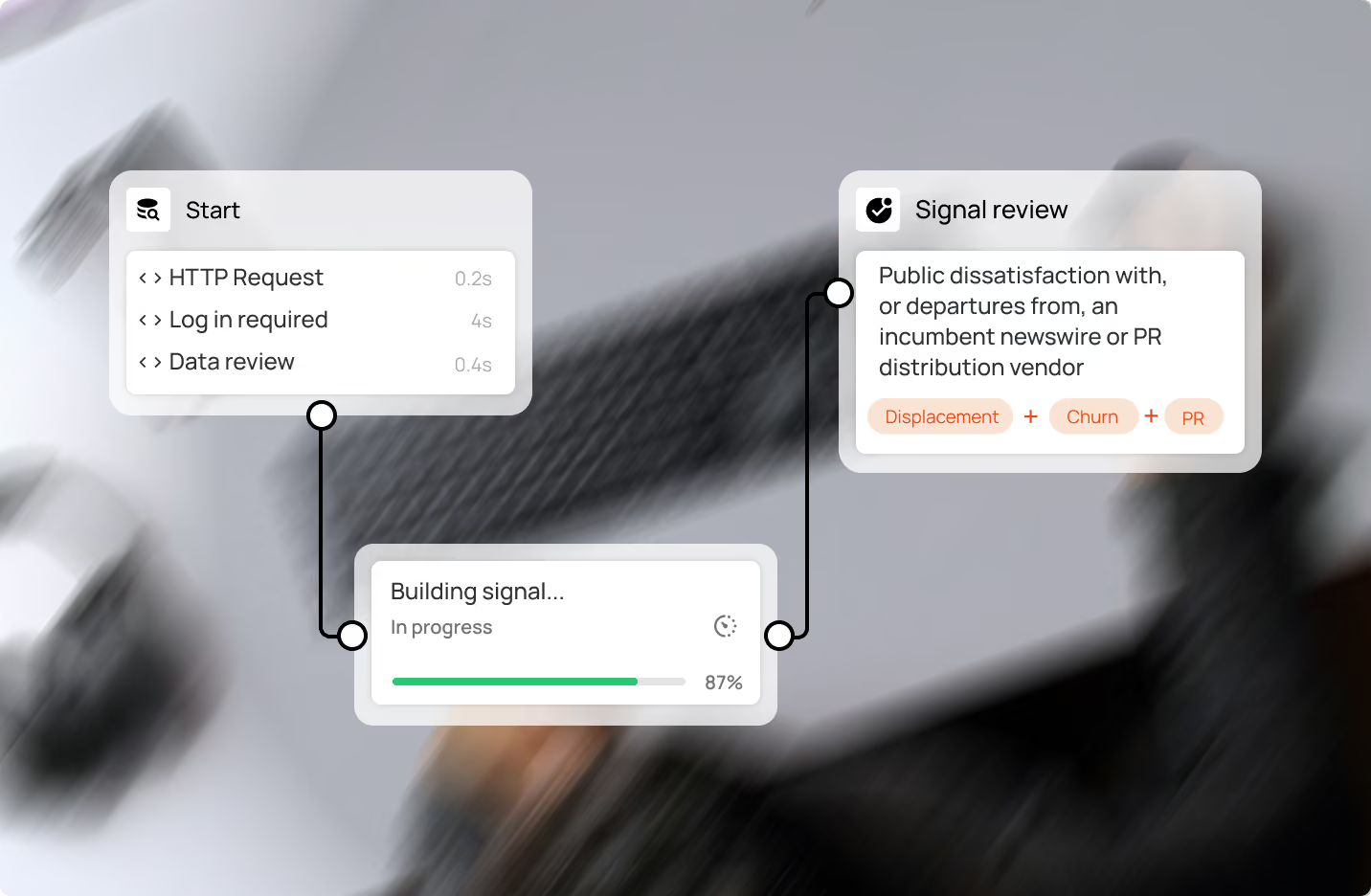
"Wait, you can track that?"
Real signals, live in HotSauce today. None of them appear on any menu.
Accounts pursuing ISO 27001 certification while running a Java estate. Compliance programmes force patching, support and versioning decisions.
Accounts publishing post-incident reviews or outage reports. Public accountability for downtime means reliability has executive attention right now.
Accounts in a public crisis or reputational incident. Comms teams under fire need newsroom and distribution infrastructure immediately.
Accounts actively reviewing their payroll outsourcing provider. A live review is the entire sales cycle handed to you on a plate.
New contingent-workforce programmes and formal reviews of contractor engagement. A formal review is a buying process by another name.
Tenders and supplier reviews for installation, merchandising, signage or maintenance. Service contracts quietly coming to market.
What would we track for you?

Lorem ipsum dolor sit amet, consectetur adipiscing elit. Suspendisse vitae vulputate orci. Aliquam auctor congue porta. Aenean odio urna, varius vitae leo eget, dapibus eleifend nibh. Nunc a tincidunt dui, sed lobortis nisl. Nullam a eros sit amet eros gravida eleifend.
HotSauce at a glance
Signal building, scoring, triage, integrations, permissions and bespoke builds.
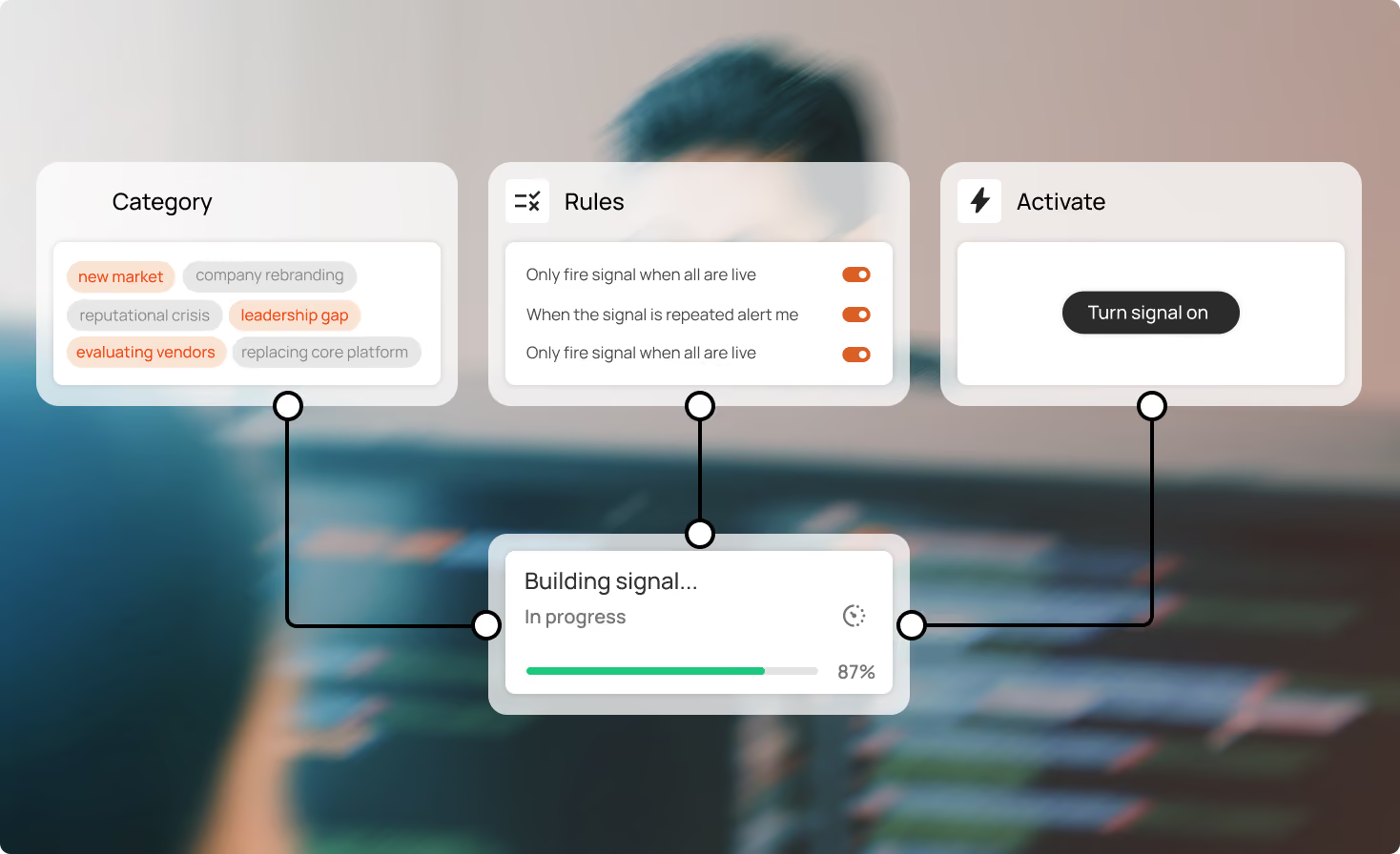
Describe what you want to know in plain English and the Assistant configures it for you. Or use the Builder for full manual control: pick the type, set the conditions, review, activate. Edit, pause or reactivate any signal without losing its history.
Find accounts with firmographic filters across industry, size, revenue, location and age, or upload your own list with column mapping. Then score every account across six categories, with Fit Tiers assigned by rank rather than arbitrary thresholds.

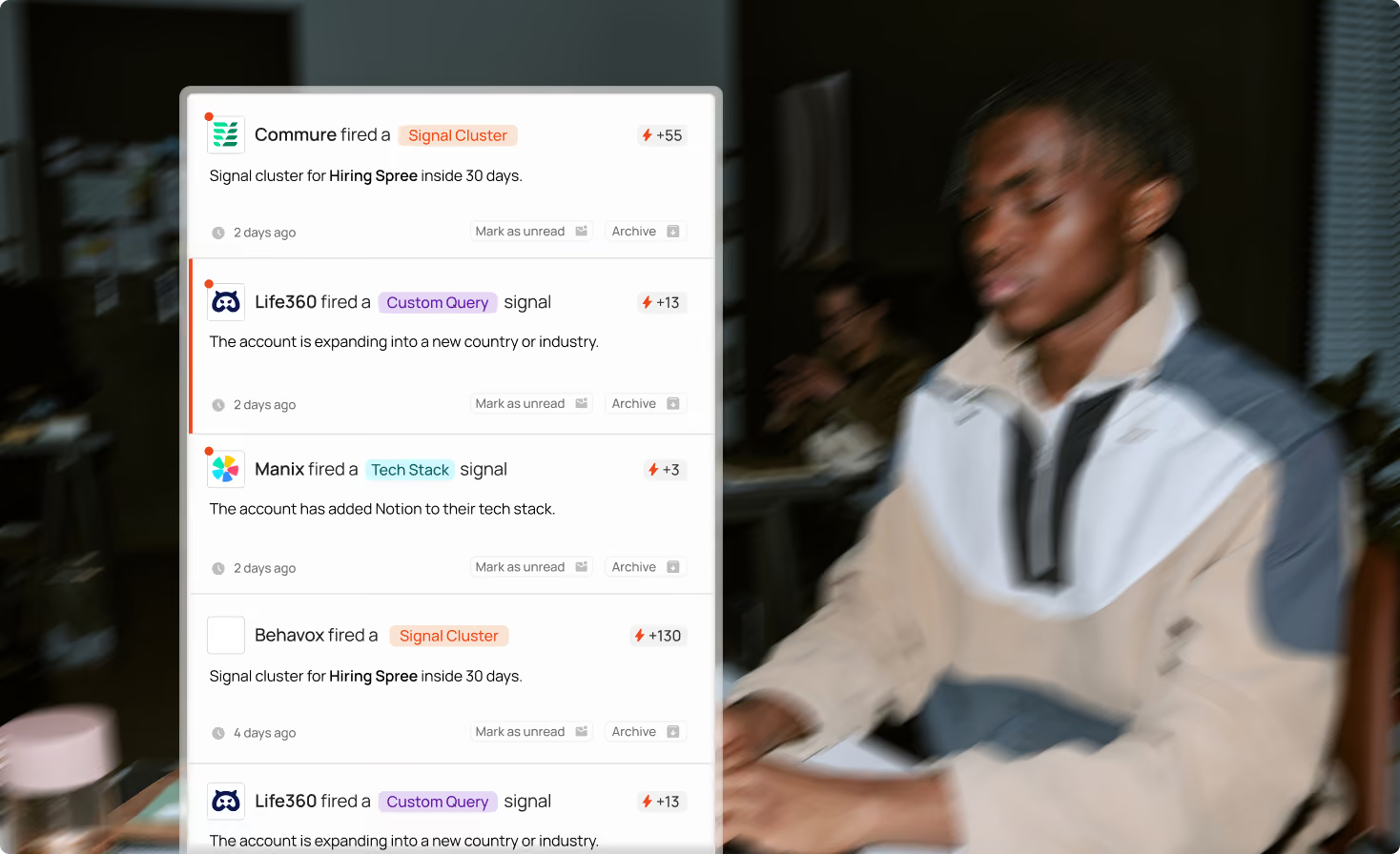
Read, reviewed, archived and assigned states so nothing gets worked twice. AI analysis on every signal, a daily briefing, weekly account summaries, and markers showing what's already been actioned.
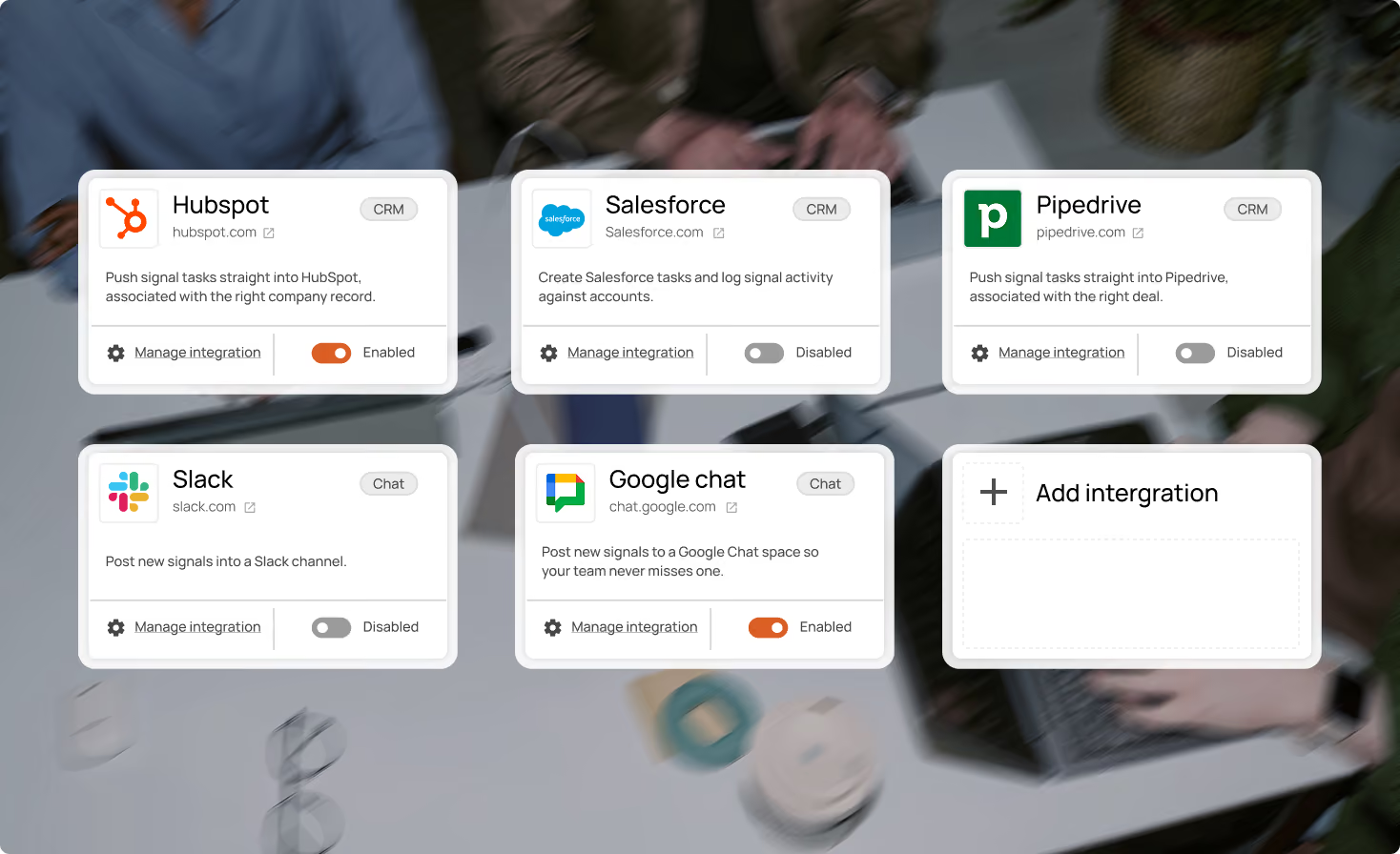
HubSpot, Salesforce and Pipedrive tasks with pre-filled context, owner mapping and field mapping. Slack and Google Chat alerts with per-person notification preferences.
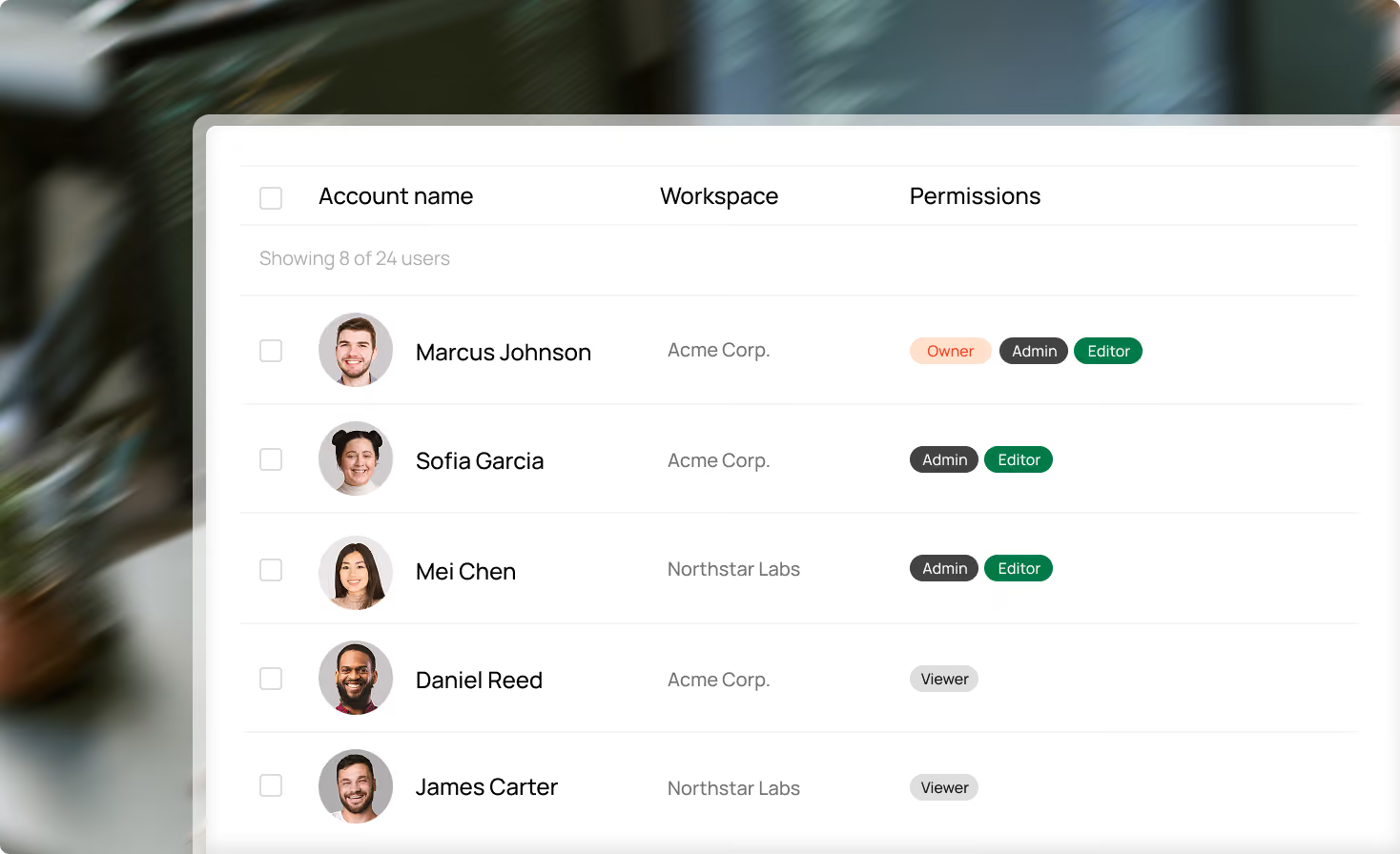
Separate workspaces per region, segment or product line. Four role levels, a per-workspace permissions matrix, and genuinely read-only viewer access for stakeholders.
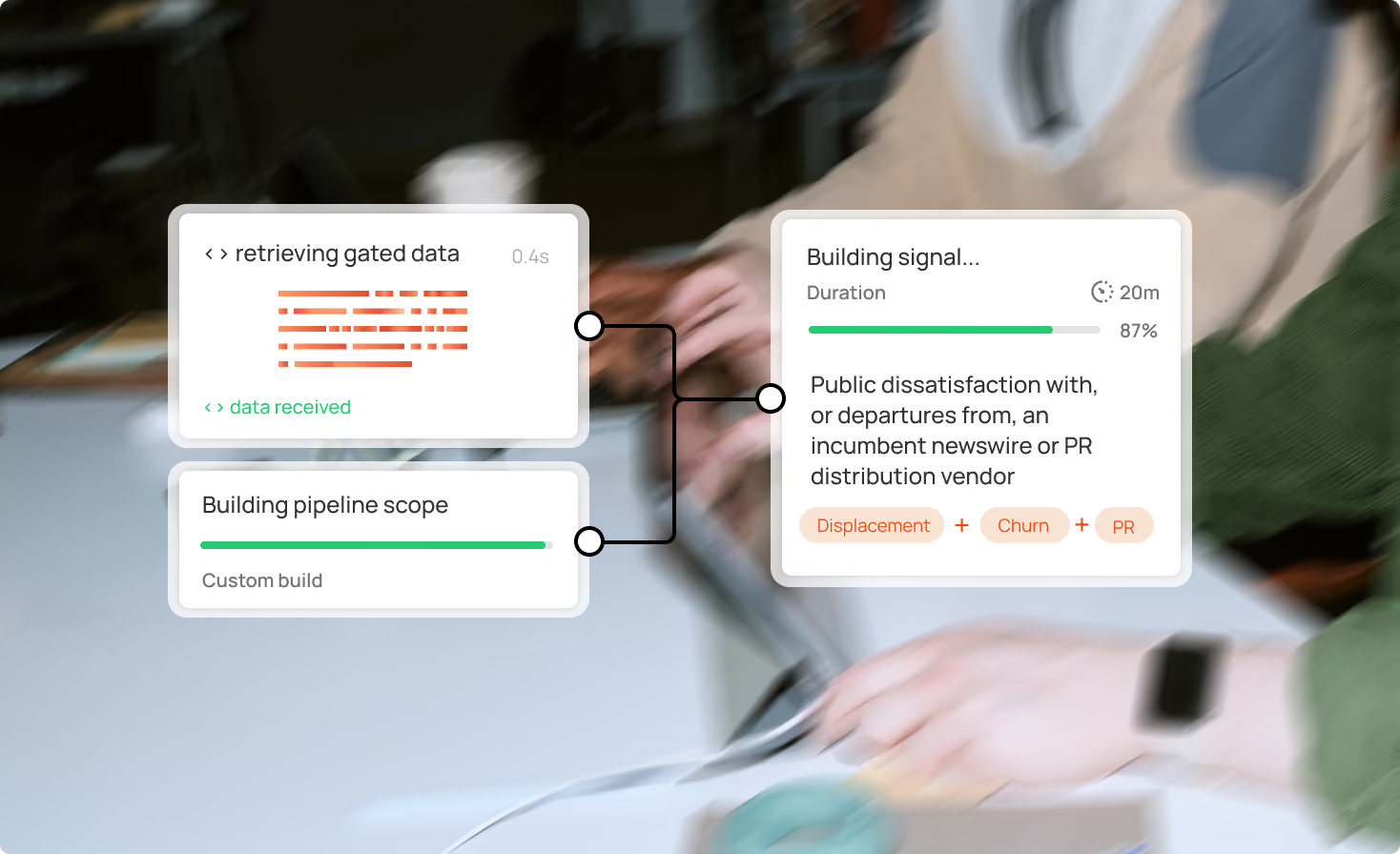
When the data is gated, buried in file metadata or spread across datasets nobody has joined up, our engineers build the pipeline. It lands in your feed like any other signal. Scoped and priced separately.
Questions before you commit:
I need to build a business case
Why are the results so good?

Because your Unique-to-You signals are built around your buyers rather than picked from a list every one of your competitors is also picking from.
How long before we see something?
Signals start running as soon as your accounts are loaded and your signals are configured. HotSauce looks back for relevant matches, then monitors daily from there. By the end of the first week, you’ll have a clear view of which accounts are active and what’s happening at them.
How many accounts can we monitor?
It depends on your plan. Fit scoring narrows your full market down to the accounts worth watching, and we size your plan around that list.
Questions about the product
Do we need a GTM engineer to run this?
No. Our team designs and builds your signal library and keeps it tuned with you. You can edit priorities and signals yourself, but you never need to hire for it.
What if the signal we need doesn't exist anywhere?
That's white glove. If the data is gated, buried in file metadata or spread across datasets, our engineers build the pipeline and it lands in your feed like any other signal. Scoped and priced separately.
Do we still get the standard signals like funding and hiring?
Yes. Funding, M&A, job postings, senior hires, tech stack changes and hiring intent all run as standard. Your own signals sit alongside them.
Where does the data come from?
Three core sources: job postings, analysed for the language in the description as well as the title; technology detected on company websites; and the open web, including news, tender portals, company filings and trade press. Every source is checked daily against every account you monitor.
Where does the data come from?
[Decision pending: whether to name data providers publicly or keep provider detail to sales conversations.]
Can stakeholders see the work without breaking it?
Yes. Viewer access is read-only, with editing controls visibly disabled rather than hidden. You can also create custom roles for each client, setting exactly what they can see and do.
Why not something else?
How is this different from intent data?
Intent data tells you someone researched your category. It doesn't tell you what a company is investing in, and it sells the same accounts to everyone chasing them. With HotSauce, every score shows which signals fired and why.
Why can't we just build this ourselves in Clay?
You can build signals in Clay if you have someone to build and maintain them. That's the hire we remove. We design, build and tune the library.
Why can't we just use an AI chatbot?
A chatbot answers a question once. These signals run against your whole market every day and land in your CRM with the reason attached.


